San Diego Slip and Fall Lawyer
San Diego Slip and Fall Lawyer
Premises Liability Attorney in San Diego | Free Consultation
| No Attorney Fee Unless We Recover Compensation for You
If you were injured in a slip and fall accident in San Diego because of an unsafe property condition, you may have the right to pursue compensation for your injuries and financial losses.
At Accident Law Center (Andy Van Le & Associates, PC), our San Diego slip and fall lawyers represent people injured at stores, restaurants, apartment complexes, hotels, parking lots, businesses, and other properties throughout San Diego County.
A slip and fall can result in much more than temporary pain. Broken bones, head injuries, back injuries, surgery, rehabilitation, time away from work, and long-term physical limitations can significantly affect your life.
Our attorneys investigate what caused the fall, determine who may be responsible, preserve available evidence, communicate with insurance companies, and pursue compensation for qualifying losses.
- Free consultation
- No attorney fee unless we recover compensation for you
- Direct communication with an attorney
- Local San Diego law firm
- Representation throughout San Diego County
Call (619) 525-0001 to discuss your accident with a San Diego slip and fall attorney.
What Is Premises Liability?
Premises liability refers to legal claims involving injuries caused by dangerous conditions on property owned, occupied, or controlled by another person or business.
Property owners and others responsible for maintaining property generally have obligations to keep their premises reasonably safe under the circumstances.
A premises liability claim may arise when a dangerous condition exists and the responsible party knew or should have known about the hazard but failed to take reasonable steps to correct it or provide an adequate warning.
Slip and fall accidents are one of the most common types of premises liability cases.
They can occur at:
- Grocery stores
- Retail stores
- Restaurants and bars
- Hotels and resorts
- Apartment and condominium complexes
- Shopping centers
- Office buildings
- Parking lots and parking garages
- Stairways
- Sidewalks and walkways
- Other commercial or residential properties
If you suffered an injury because of an unsafe property condition, a San Diego personal injury attorney can help evaluate whether you may have a claim.
Common Causes of Slip and Fall Accidents in San Diego
Slip and fall and trip and fall accidents can result from many different property hazards.
Common causes include:
- Wet or slippery floors
- Spilled liquids
- Recently mopped floors without adequate warnings
- Leaking refrigerators or plumbing
- Rainwater tracked into entrances
- Uneven flooring
- Cracked pavement
- Damaged sidewalks
- Potholes
- Broken or uneven stairs
- Missing or loose handrails
- Torn carpeting
- Loose rugs or floor mats
- Poor lighting
- Debris or merchandise in walkways
- Unsafe parking lots
- Unmarked changes in floor elevation
The existence of a dangerous condition alone does not necessarily establish liability. An important question is often whether the person or business responsible for the property knew—or reasonably should have known—about the hazard and had an opportunity to address it.
For additional information, read Common Causes of Slip and Fall Accidents in San Diego.
Who Can Be Responsible for a Slip and Fall Accident?
Determining who is legally responsible for a fall can be more complicated than simply identifying who owns the building.
Depending on the circumstances, potentially responsible parties may include:
- Property owners
- Business owners
- Commercial tenants
- Landlords
- Property management companies
- Maintenance companies
- Contractors
- Other parties responsible for inspecting or maintaining the property
For example, a business leasing retail space may be responsible for conditions inside the store while another party may be responsible for common areas or parking facilities.
Determining who controlled the area where the accident happened and who was responsible for maintaining it can therefore be an important part of investigating a premises liability claim.
How Do You Prove a Slip and Fall Case in California?
Not every fall automatically means a property owner was negligent.
A premises liability case generally requires evidence connecting a dangerous property condition to the injury and establishing why the responsible party should be held accountable.
Important questions can include:
- What dangerous condition caused the fall?
- Who owned, occupied, or controlled the property?
- Who was responsible for maintaining the area?
- Did the responsible party create the hazard?
- Did someone know about the dangerous condition?
- Should the hazard have been discovered through reasonable inspection?
- How long did the dangerous condition exist?
- Were adequate warnings provided?
- Did the dangerous condition cause the injury?
- What damages resulted from the accident?
Evidence becomes particularly important when the property owner or insurance company disputes how the fall happened.
Did the Property Owner Know About the Dangerous Condition?
One of the central issues in many slip and fall cases is notice.
A property owner or business may have actual notice of a hazard when someone knew the dangerous condition existed.
For example, an employee may have seen a spill, received a customer complaint, or previously documented a maintenance problem.
Another issue is whether the responsible party should have discovered the condition through reasonable inspection or maintenance.
Evidence relevant to notice may include:
- Inspection records
- Cleaning logs
- Maintenance records
- Employee statements
- Prior complaints
- Previous incidents
- Surveillance footage
- Photographs
- Witness statements
- The nature and condition of the hazard
The length of time a dangerous condition existed can become an important issue in determining whether it reasonably should have been discovered and addressed.
What Evidence Can Help Prove a Slip and Fall Claim?
Slip and fall evidence can disappear quickly.
A spill can be cleaned. A broken step can be repaired. Surveillance video can be overwritten. Employees and witnesses may eventually have difficulty remembering what happened.
Evidence that may help establish what occurred includes:
- Photographs of the exact hazard
- Video of the accident scene
- Surveillance-camera footage
- Witness names and contact information
- Incident reports
- Employee statements
- Inspection records
- Cleaning and maintenance logs
- Photographs of your injuries
- Medical records
- Medical bills
- Clothing or shoes worn during the accident
- Documentation showing lost time from work
When possible, photograph the dangerous condition before it is cleaned, repaired, moved, or changed.
What Should You Do After a Slip and Fall Accident?
What you do immediately after a fall can affect both your health and the evidence available later.
If you are able:
- Seek appropriate medical care. Some injuries may not be obvious immediately after a fall.
- Report the accident. Notify the property owner, manager, business, landlord, or other appropriate person.
- Ask for an incident report. If a report is prepared, request information about obtaining a copy.
- Photograph the hazard. Take pictures from several angles if it is safe to do so.
- Document the surrounding area. Photograph warning signs—or the absence of them—lighting, flooring, stairs, walkways, and other relevant conditions.
- Get witness information. Obtain names and contact information from anyone who saw the fall or the dangerous condition.
- Save your clothing and shoes. Do not immediately discard items that could later become relevant.
- Keep your records. Save medical paperwork, receipts, correspondence, photographs, and documentation of missed work.
- Be careful with insurance-company statements. Avoid guessing about what happened or minimizing your injuries before their extent is known.
Reporting the accident and preserving evidence early can become especially important because dangerous conditions may disappear shortly after a fall.
How Long Do You Have to Report a Slip and Fall Accident in California?
Reporting an accident to a property owner and filing a lawsuit are two different things.
Even when there is not an immediate lawsuit filing deadline, reporting a fall promptly can help create a record of where and when the accident occurred.
It can also provide an opportunity to identify witnesses, request an incident report, and preserve surveillance footage or other evidence before it disappears.
Waiting to report an accident can make it easier for an insurance company or property owner to dispute when, where, or how the injury occurred.
For more information, read How Long Do You Have to Report a Slip and Fall Accident in California?
What If There Was No Warning Sign?
Warning signs can become important evidence in premises liability cases.
For example, a business that has recently mopped a floor may place a warning sign near the wet area.
However, simply placing a sign somewhere on the property does not automatically determine whether reasonable precautions were taken.
Questions may include:
- Where was the sign located?
- Could visitors reasonably see it before reaching the hazard?
- Did the sign adequately identify the dangerous condition?
- Were additional precautions reasonable under the circumstances?
- How large was the hazardous area?
- How long did the condition exist?
Photographs taken immediately after the accident can help document the location of warning signs and the condition of the property.
What If the Property Owner Says You Should Have Seen the Hazard?
Insurance companies may argue that an injured person was distracted, was not watching where they were walking, ignored a warning, or should have noticed an obvious condition.
That does not necessarily mean a claim is automatically barred.
California's comparative-fault rules can allow responsibility to be divided when more than one person's actions contributed to an accident.
Evidence such as photographs, surveillance footage, lighting conditions, witness statements, warning signs, and the nature of the hazard can be important when fault is disputed.
Injuries Caused by Slip and Fall Accidents
Falls can cause serious injuries, particularly when someone lands on a hard surface, falls down stairs, strikes their head, or has an existing vulnerability that makes the impact more dangerous.
Slip and fall injuries may include:
- Traumatic brain injuries
- Concussions
- Head and facial injuries
- Neck injuries
- Back injuries
- Herniated discs
- Spinal injuries
- Hip fractures
- Broken wrists and arms
- Shoulder injuries
- Knee and ankle injuries
- Soft-tissue injuries
- Nerve damage
- Chronic pain
- Mobility limitations
Some injuries require surgery, physical therapy, rehabilitation, medication, assistive devices, or ongoing medical treatment.
When a fall results in a fatal injury, qualifying surviving family members may have additional legal options. Learn more about working with a wrongful death lawyer in San Diego.
Falls involving suspected neglect or unsafe conditions in a nursing home may involve additional legal issues. Learn more about
nursing home abuse and elder neglect.
Compensation in a San Diego Slip and Fall Case
The damages available depend on the circumstances of the accident and the injuries involved.
Potential compensation may include qualifying losses such as:
Medical Expenses
These may include emergency care, hospitalization, physician visits, diagnostic imaging, surgery, physical therapy, rehabilitation, medication, and other accident-related treatment.
Future Medical Care
Serious injuries may require future surgery, therapy, rehabilitation, medication, medical equipment, or other ongoing care.
Lost Wages
If your injuries prevented you from working, qualifying income lost during your recovery may be included in the claim.
Reduced Earning Capacity
A serious or permanent injury may affect your ability to perform the same job, work the same hours, or earn the same income in the future.
Pain and Suffering
Depending on the circumstances, qualifying noneconomic effects of an injury may also be considered.
Other Accident-Related Losses
Additional damages may be available depending on the facts of the individual case.
A proper evaluation should consider the overall effect of the injury rather than focusing only on the first medical bills.
How Much Is a Slip and Fall Case Worth?
There is no standard settlement amount for a slip and fall accident.
Factors that may affect a claim's value include:
- Severity of the injuries
- Medical treatment received
- Need for future treatment
- Whether an injury is temporary or permanent
- Time missed from work
- Reduced future earning ability
- Pain and physical limitations
- Effect on everyday activities
- Strength of the evidence
- Whether liability is disputed
- Whether comparative fault is alleged
- Available insurance coverage
An early insurance settlement offer may be made before the long-term effects of an injury are fully understood.
For that reason, the circumstances, medical evidence, financial losses, and potential future needs should be evaluated before resolving a serious injury claim.
How Insurance Companies Defend Slip and Fall Claims
Insurance companies may challenge premises liability claims in several ways.
They may argue that:
- The dangerous condition did not exist
- The property owner did not know about the hazard
- The hazard had not existed long enough to be discovered
- Reasonable inspections were performed
- Adequate warnings were provided
- The injured person should have seen the condition
- The injured person caused or contributed to the fall
- The injuries were caused by something else
- The injuries are less serious than claimed
Accident Law Center can investigate the accident, gather available evidence, communicate with insurers, document your injuries and financial losses, and evaluate defenses raised against the claim.
Why Hire a Local San Diego Premises Liability Attorney?
Slip and fall cases can depend heavily on the specific property, dangerous condition, witnesses, records, and evidence involved.
Accident Law Center is a local San Diego law firm located at:
1551 4th Avenue, Suite 102
San Diego, CA 92101
Our attorneys represent injured people throughout San Diego County, including San Diego, Chula Vista, La Jolla, Mission Valley, Downtown San Diego, the Gaslamp Quarter, Pacific Beach, El Cajon, La Mesa, Escondido, Oceanside, Carlsbad, Del Mar, Vista, San Marcos, and surrounding communities.
Slip and fall accidents may occur at local restaurants, stores, hotels, apartment buildings, shopping centers, parking structures, offices, and other properties.
Our focus is on the evidence and circumstances of the individual accident rather than treating every premises liability case the same.
Why Clients Choose Accident Law Center
At Accident Law Center, our attorneys provide personal representation to people injured because of unsafe property conditions.
Clients receive:
- Direct communication with an attorney
- Individual attention to their case
- Investigation of the accident
- Evidence-preservation efforts when appropriate
- Documentation of injuries and financial losses
- Communication and negotiation with insurance companies
- Preparation for litigation when necessary
- Contingency-fee representation
You do not pay attorney fees unless we recover compensation for you.
What a Client Says About Accident Law Center
“Andy kept me updated at least once or twice a month with his patience. It seemed to me that Andy had never been afraid of going to trial by the fact that they really tried exceedingly hard to get a better settlement for me with no fear of pursuing further litigation.”
— Satisfied Client
Speak With a San Diego Slip and Fall Lawyer
If you were injured because of a dangerous condition on someone else's property, Accident Law Center can review what happened and help you understand your legal options.
We can investigate the circumstances of the fall, identify potentially responsible parties, preserve available evidence, document your injuries and losses, communicate with insurance companies, and pursue compensation on your behalf.
Call (619) 525-0001 for a free consultation.
No attorney fee unless we recover compensation for you.
San Diego Slip and Fall FAQs
What should I do after a slip and fall accident?
Seek appropriate medical care, report the accident to the property owner or manager, request an incident report when available, photograph the dangerous condition, obtain witness information, preserve relevant clothing or shoes, and keep records related to your injuries and expenses.
How do you prove negligence in a slip and fall case?
A slip and fall claim generally requires evidence showing that a dangerous condition existed, the responsible party knew or reasonably should have known about it, reasonable steps were not taken to correct or warn about the hazard, and the condition caused the injury.
Can I sue a business for a slip and fall accident?
Potentially. Whether a business may be responsible depends on factors such as what caused the fall, who controlled the area, whether the business created or knew about the hazard, whether it reasonably should have discovered the condition, and whether reasonable precautions were taken.
How long do I have to report a slip and fall accident?
Reporting a fall to a property owner or business and filing a legal claim are different issues. Reporting an accident promptly can help document when and where it occurred and may make it easier to preserve surveillance footage, witness information, incident reports, and other evidence.
What if the property owner says they didn't know about the dangerous condition?
Actual knowledge is not necessarily the only issue. Depending on the circumstances, a premises liability claim may also involve whether a dangerous condition existed long enough that it reasonably should have been discovered through inspection or maintenance.
What if there was a wet-floor or warning sign?
The presence of a warning sign does not by itself resolve every liability question. Its location, visibility, wording, proximity to the hazard, and whether additional precautions were reasonable may all be relevant.
Can I recover compensation if I was partly responsible for my fall?
Potentially. California's comparative-fault rules can allow responsibility to be divided when more than one person's actions contributed to an accident. Compensation may be reduced according to the injured person's share of responsibility.
What evidence should I collect after a slip and fall?
Helpful evidence may include photographs and video of the dangerous condition, surveillance footage, witness information, incident reports, maintenance or inspection records, medical records, photographs of injuries, and documentation of lost income.
What compensation may be available after a slip and fall accident?
Depending on the circumstances, qualifying damages may include medical expenses, future medical care, lost wages, reduced earning capacity, pain and suffering, and other losses resulting from the injury.
How much is a slip and fall case worth?
There is no standard settlement amount. The value depends on factors such as the severity of the injuries, medical treatment, future medical needs, lost income, long-term limitations, strength of the liability evidence, comparative fault, and available insurance coverage.
How much does it cost to hire Accident Law Center?
Accident Law Center handles personal injury cases on a contingency-fee basis. You do not pay attorney fees unless the firm recovers compensation for you.
If you were injured in a slip and fall accident in San Diego because of an unsafe property condition, you may have the right to pursue compensation for your injuries and financial losses.
At Accident Law Center (Andy Van Le & Associates, PC), our San Diego slip and fall lawyers represent people injured at stores, restaurants, apartment complexes, hotels, parking lots, businesses, and other properties throughout San Diego County.
A slip and fall can result in much more than temporary pain. Broken bones, head injuries, back injuries, surgery, rehabilitation, time away from work, and long-term physical limitations can significantly affect your life.
Our attorneys investigate what caused the fall, determine who may be responsible, preserve available evidence, communicate with insurance companies, and pursue compensation for qualifying losses.
- Free consultation
- No attorney fee unless we recover compensation for you
- Direct communication with an attorney
- Local San Diego law firm
- Representation throughout San Diego County
Call (619) 525-0001 to discuss your accident with a San Diego slip and fall attorney.
What Is Premises Liability?
Premises liability refers to legal claims involving injuries caused by dangerous conditions on property owned, occupied, or controlled by another person or business.
Property owners and others responsible for maintaining property generally have obligations to keep their premises reasonably safe under the circumstances.
A premises liability claim may arise when a dangerous condition exists and the responsible party knew or should have known about the hazard but failed to take reasonable steps to correct it or provide an adequate warning.
Slip and fall accidents are one of the most common types of premises liability cases.
They can occur at:
- Grocery stores
- Retail stores
- Restaurants and bars
- Hotels and resorts
- Apartment and condominium complexes
- Shopping centers
- Office buildings
- Parking lots and parking garages
- Stairways
- Sidewalks and walkways
- Other commercial or residential properties
If you suffered an injury because of an unsafe property condition, a San Diego personal injury attorney can help evaluate whether you may have a claim.
Common Causes of Slip and Fall Accidents in San Diego
Slip and fall and trip and fall accidents can result from many different property hazards.
Common causes include:
- Wet or slippery floors
- Spilled liquids
- Recently mopped floors without adequate warnings
- Leaking refrigerators or plumbing
- Rainwater tracked into entrances
- Uneven flooring
- Cracked pavement
- Damaged sidewalks
- Potholes
- Broken or uneven stairs
- Missing or loose handrails
- Torn carpeting
- Loose rugs or floor mats
- Poor lighting
- Debris or merchandise in walkways
- Unsafe parking lots
- Unmarked changes in floor elevation
The existence of a dangerous condition alone does not necessarily establish liability. An important question is often whether the person or business responsible for the property knew—or reasonably should have known—about the hazard and had an opportunity to address it.
For additional information, read Common Causes of Slip and Fall Accidents in San Diego.
Who Can Be Responsible for a Slip and Fall Accident?
Determining who is legally responsible for a fall can be more complicated than simply identifying who owns the building.
Depending on the circumstances, potentially responsible parties may include:
- Property owners
- Business owners
- Commercial tenants
- Landlords
- Property management companies
- Maintenance companies
- Contractors
- Other parties responsible for inspecting or maintaining the property
For example, a business leasing retail space may be responsible for conditions inside the store while another party may be responsible for common areas or parking facilities.
Determining who controlled the area where the accident happened and who was responsible for maintaining it can therefore be an important part of investigating a premises liability claim.
How Do You Prove a Slip and Fall Case in California?
Not every fall automatically means a property owner was negligent.
A premises liability case generally requires evidence connecting a dangerous property condition to the injury and establishing why the responsible party should be held accountable.
Important questions can include:
- What dangerous condition caused the fall?
- Who owned, occupied, or controlled the property?
- Who was responsible for maintaining the area?
- Did the responsible party create the hazard?
- Did someone know about the dangerous condition?
- Should the hazard have been discovered through reasonable inspection?
- How long did the dangerous condition exist?
- Were adequate warnings provided?
- Did the dangerous condition cause the injury?
- What damages resulted from the accident?
Evidence becomes particularly important when the property owner or insurance company disputes how the fall happened.
Did the Property Owner Know About the Dangerous Condition?
One of the central issues in many slip and fall cases is notice.
A property owner or business may have actual notice of a hazard when someone knew the dangerous condition existed.
For example, an employee may have seen a spill, received a customer complaint, or previously documented a maintenance problem.
Another issue is whether the responsible party should have discovered the condition through reasonable inspection or maintenance.
Evidence relevant to notice may include:
- Inspection records
- Cleaning logs
- Maintenance records
- Employee statements
- Prior complaints
- Previous incidents
- Surveillance footage
- Photographs
- Witness statements
- The nature and condition of the hazard
The length of time a dangerous condition existed can become an important issue in determining whether it reasonably should have been discovered and addressed.
What Evidence Can Help Prove a Slip and Fall Claim?
Slip and fall evidence can disappear quickly.
A spill can be cleaned. A broken step can be repaired. Surveillance video can be overwritten. Employees and witnesses may eventually have difficulty remembering what happened.
Evidence that may help establish what occurred includes:
- Photographs of the exact hazard
- Video of the accident scene
- Surveillance-camera footage
- Witness names and contact information
- Incident reports
- Employee statements
- Inspection records
- Cleaning and maintenance logs
- Photographs of your injuries
- Medical records
- Medical bills
- Clothing or shoes worn during the accident
- Documentation showing lost time from work
When possible, photograph the dangerous condition before it is cleaned, repaired, moved, or changed.
What Should You Do After a Slip and Fall Accident?
What you do immediately after a fall can affect both your health and the evidence available later.
If you are able:
- Seek appropriate medical care. Some injuries may not be obvious immediately after a fall.
- Report the accident. Notify the property owner, manager, business, landlord, or other appropriate person.
- Ask for an incident report. If a report is prepared, request information about obtaining a copy.
- Photograph the hazard. Take pictures from several angles if it is safe to do so.
- Document the surrounding area. Photograph warning signs—or the absence of them—lighting, flooring, stairs, walkways, and other relevant conditions.
- Get witness information. Obtain names and contact information from anyone who saw the fall or the dangerous condition.
- Save your clothing and shoes. Do not immediately discard items that could later become relevant.
- Keep your records. Save medical paperwork, receipts, correspondence, photographs, and documentation of missed work.
- Be careful with insurance-company statements. Avoid guessing about what happened or minimizing your injuries before their extent is known.
Reporting the accident and preserving evidence early can become especially important because dangerous conditions may disappear shortly after a fall.
How Long Do You Have to Report a Slip and Fall Accident in California?
Reporting an accident to a property owner and filing a lawsuit are two different things.
Even when there is not an immediate lawsuit filing deadline, reporting a fall promptly can help create a record of where and when the accident occurred.
It can also provide an opportunity to identify witnesses, request an incident report, and preserve surveillance footage or other evidence before it disappears.
Waiting to report an accident can make it easier for an insurance company or property owner to dispute when, where, or how the injury occurred.
For more information, read How Long Do You Have to Report a Slip and Fall Accident in California?
What If There Was No Warning Sign?
Warning signs can become important evidence in premises liability cases.
For example, a business that has recently mopped a floor may place a warning sign near the wet area.
However, simply placing a sign somewhere on the property does not automatically determine whether reasonable precautions were taken.
Questions may include:
- Where was the sign located?
- Could visitors reasonably see it before reaching the hazard?
- Did the sign adequately identify the dangerous condition?
- Were additional precautions reasonable under the circumstances?
- How large was the hazardous area?
- How long did the condition exist?
Photographs taken immediately after the accident can help document the location of warning signs and the condition of the property.
What If the Property Owner Says You Should Have Seen the Hazard?
Insurance companies may argue that an injured person was distracted, was not watching where they were walking, ignored a warning, or should have noticed an obvious condition.
That does not necessarily mean a claim is automatically barred.
California's comparative-fault rules can allow responsibility to be divided when more than one person's actions contributed to an accident.
Evidence such as photographs, surveillance footage, lighting conditions, witness statements, warning signs, and the nature of the hazard can be important when fault is disputed.
Injuries Caused by Slip and Fall Accidents
Falls can cause serious injuries, particularly when someone lands on a hard surface, falls down stairs, strikes their head, or has an existing vulnerability that makes the impact more dangerous.
Slip and fall injuries may include:
- Traumatic brain injuries
- Concussions
- Head and facial injuries
- Neck injuries
- Back injuries
- Herniated discs
- Spinal injuries
- Hip fractures
- Broken wrists and arms
- Shoulder injuries
- Knee and ankle injuries
- Soft-tissue injuries
- Nerve damage
- Chronic pain
- Mobility limitations
Some injuries require surgery, physical therapy, rehabilitation, medication, assistive devices, or ongoing medical treatment.
When a fall results in a fatal injury, qualifying surviving family members may have additional legal options. Learn more about working with a wrongful death lawyer in San Diego.
Falls involving suspected neglect or unsafe conditions in a nursing home may involve additional legal issues. Learn more about
nursing home abuse and elder neglect.
Compensation in a San Diego Slip and Fall Case
The damages available depend on the circumstances of the accident and the injuries involved.
Potential compensation may include qualifying losses such as:
Medical Expenses
These may include emergency care, hospitalization, physician visits, diagnostic imaging, surgery, physical therapy, rehabilitation, medication, and other accident-related treatment.
Future Medical Care
Serious injuries may require future surgery, therapy, rehabilitation, medication, medical equipment, or other ongoing care.
Lost Wages
If your injuries prevented you from working, qualifying income lost during your recovery may be included in the claim.
Reduced Earning Capacity
A serious or permanent injury may affect your ability to perform the same job, work the same hours, or earn the same income in the future.
Pain and Suffering
Depending on the circumstances, qualifying noneconomic effects of an injury may also be considered.
Other Accident-Related Losses
Additional damages may be available depending on the facts of the individual case.
A proper evaluation should consider the overall effect of the injury rather than focusing only on the first medical bills.
How Much Is a Slip and Fall Case Worth?
There is no standard settlement amount for a slip and fall accident.
Factors that may affect a claim's value include:
- Severity of the injuries
- Medical treatment received
- Need for future treatment
- Whether an injury is temporary or permanent
- Time missed from work
- Reduced future earning ability
- Pain and physical limitations
- Effect on everyday activities
- Strength of the evidence
- Whether liability is disputed
- Whether comparative fault is alleged
- Available insurance coverage
An early insurance settlement offer may be made before the long-term effects of an injury are fully understood.
For that reason, the circumstances, medical evidence, financial losses, and potential future needs should be evaluated before resolving a serious injury claim.
How Insurance Companies Defend Slip and Fall Claims
Insurance companies may challenge premises liability claims in several ways.
They may argue that:
- The dangerous condition did not exist
- The property owner did not know about the hazard
- The hazard had not existed long enough to be discovered
- Reasonable inspections were performed
- Adequate warnings were provided
- The injured person should have seen the condition
- The injured person caused or contributed to the fall
- The injuries were caused by something else
- The injuries are less serious than claimed
Accident Law Center can investigate the accident, gather available evidence, communicate with insurers, document your injuries and financial losses, and evaluate defenses raised against the claim.
Why Hire a Local San Diego Premises Liability Attorney?
Slip and fall cases can depend heavily on the specific property, dangerous condition, witnesses, records, and evidence involved.
Accident Law Center is a local San Diego law firm located at:
1551 4th Avenue, Suite 102
San Diego, CA 92101
Our attorneys represent injured people throughout San Diego County, including San Diego, Chula Vista, La Jolla, Mission Valley, Downtown San Diego, the Gaslamp Quarter, Pacific Beach, El Cajon, La Mesa, Escondido, Oceanside, Carlsbad, Del Mar, Vista, San Marcos, and surrounding communities.
Slip and fall accidents may occur at local restaurants, stores, hotels, apartment buildings, shopping centers, parking structures, offices, and other properties.
Our focus is on the evidence and circumstances of the individual accident rather than treating every premises liability case the same.
Why Clients Choose Accident Law Center
At Accident Law Center, our attorneys provide personal representation to people injured because of unsafe property conditions.
Clients receive:
- Direct communication with an attorney
- Individual attention to their case
- Investigation of the accident
- Evidence-preservation efforts when appropriate
- Documentation of injuries and financial losses
- Communication and negotiation with insurance companies
- Preparation for litigation when necessary
- Contingency-fee representation
You do not pay attorney fees unless we recover compensation for you.
What a Client Says About Accident Law Center
“Andy kept me updated at least once or twice a month with his patience. It seemed to me that Andy had never been afraid of going to trial by the fact that they really tried exceedingly hard to get a better settlement for me with no fear of pursuing further litigation.”
— Satisfied Client
Speak With a San Diego Slip and Fall Lawyer
If you were injured because of a dangerous condition on someone else's property, Accident Law Center can review what happened and help you understand your legal options.
We can investigate the circumstances of the fall, identify potentially responsible parties, preserve available evidence, document your injuries and losses, communicate with insurance companies, and pursue compensation on your behalf.
Call (619) 525-0001 for a free consultation.
No attorney fee unless we recover compensation for you.
San Diego Slip and Fall FAQs
What should I do after a slip and fall accident?
Seek appropriate medical care, report the accident to the property owner or manager, request an incident report when available, photograph the dangerous condition, obtain witness information, preserve relevant clothing or shoes, and keep records related to your injuries and expenses.
How do you prove negligence in a slip and fall case?
A slip and fall claim generally requires evidence showing that a dangerous condition existed, the responsible party knew or reasonably should have known about it, reasonable steps were not taken to correct or warn about the hazard, and the condition caused the injury.
Can I sue a business for a slip and fall accident?
Potentially. Whether a business may be responsible depends on factors such as what caused the fall, who controlled the area, whether the business created or knew about the hazard, whether it reasonably should have discovered the condition, and whether reasonable precautions were taken.
How long do I have to report a slip and fall accident?
Reporting a fall to a property owner or business and filing a legal claim are different issues. Reporting an accident promptly can help document when and where it occurred and may make it easier to preserve surveillance footage, witness information, incident reports, and other evidence.
What if the property owner says they didn't know about the dangerous condition?
Actual knowledge is not necessarily the only issue. Depending on the circumstances, a premises liability claim may also involve whether a dangerous condition existed long enough that it reasonably should have been discovered through inspection or maintenance.
What if there was a wet-floor or warning sign?
The presence of a warning sign does not by itself resolve every liability question. Its location, visibility, wording, proximity to the hazard, and whether additional precautions were reasonable may all be relevant.
Can I recover compensation if I was partly responsible for my fall?
Potentially. California's comparative-fault rules can allow responsibility to be divided when more than one person's actions contributed to an accident. Compensation may be reduced according to the injured person's share of responsibility.
What evidence should I collect after a slip and fall?
Helpful evidence may include photographs and video of the dangerous condition, surveillance footage, witness information, incident reports, maintenance or inspection records, medical records, photographs of injuries, and documentation of lost income.
What compensation may be available after a slip and fall accident?
Depending on the circumstances, qualifying damages may include medical expenses, future medical care, lost wages, reduced earning capacity, pain and suffering, and other losses resulting from the injury.
How much is a slip and fall case worth?
There is no standard settlement amount. The value depends on factors such as the severity of the injuries, medical treatment, future medical needs, lost income, long-term limitations, strength of the liability evidence, comparative fault, and available insurance coverage.
How much does it cost to hire Accident Law Center?
Accident Law Center handles personal injury cases on a contingency-fee basis. You do not pay attorney fees unless the firm recovers compensation for you.
If you were injured in a slip and fall accident in San Diego because of an unsafe property condition, you may have the right to pursue compensation for your injuries and financial losses.
At Accident Law Center (Andy Van Le & Associates, PC), our San Diego slip and fall lawyers represent people injured at stores, restaurants, apartment complexes, hotels, parking lots, businesses, and other properties throughout San Diego County.
A slip and fall can result in much more than temporary pain. Broken bones, head injuries, back injuries, surgery, rehabilitation, time away from work, and long-term physical limitations can significantly affect your life.
Our attorneys investigate what caused the fall, determine who may be responsible, preserve available evidence, communicate with insurance companies, and pursue compensation for qualifying losses.
- Free consultation
- No attorney fee unless we recover compensation for you
- Direct communication with an attorney
- Local San Diego law firm
- Representation throughout San Diego County
Call (619) 525-0001 to discuss your accident with a San Diego slip and fall attorney.
What Is Premises Liability?
Premises liability refers to legal claims involving injuries caused by dangerous conditions on property owned, occupied, or controlled by another person or business.
Property owners and others responsible for maintaining property generally have obligations to keep their premises reasonably safe under the circumstances.
A premises liability claim may arise when a dangerous condition exists and the responsible party knew or should have known about the hazard but failed to take reasonable steps to correct it or provide an adequate warning.
Slip and fall accidents are one of the most common types of premises liability cases.
They can occur at:
- Grocery stores
- Retail stores
- Restaurants and bars
- Hotels and resorts
- Apartment and condominium complexes
- Shopping centers
- Office buildings
- Parking lots and parking garages
- Stairways
- Sidewalks and walkways
- Other commercial or residential properties
If you suffered an injury because of an unsafe property condition, a San Diego personal injury attorney can help evaluate whether you may have a claim.
Common Causes of Slip and Fall Accidents in San Diego
Slip and fall and trip and fall accidents can result from many different property hazards.
Common causes include:
- Wet or slippery floors
- Spilled liquids
- Recently mopped floors without adequate warnings
- Leaking refrigerators or plumbing
- Rainwater tracked into entrances
- Uneven flooring
- Cracked pavement
- Damaged sidewalks
- Potholes
- Broken or uneven stairs
- Missing or loose handrails
- Torn carpeting
- Loose rugs or floor mats
- Poor lighting
- Debris or merchandise in walkways
- Unsafe parking lots
- Unmarked changes in floor elevation
The existence of a dangerous condition alone does not necessarily establish liability. An important question is often whether the person or business responsible for the property knew—or reasonably should have known—about the hazard and had an opportunity to address it.
For additional information, read Common Causes of Slip and Fall Accidents in San Diego.
Who Can Be Responsible for a Slip and Fall Accident?
Determining who is legally responsible for a fall can be more complicated than simply identifying who owns the building.
Depending on the circumstances, potentially responsible parties may include:
- Property owners
- Business owners
- Commercial tenants
- Landlords
- Property management companies
- Maintenance companies
- Contractors
- Other parties responsible for inspecting or maintaining the property
For example, a business leasing retail space may be responsible for conditions inside the store while another party may be responsible for common areas or parking facilities.
Determining who controlled the area where the accident happened and who was responsible for maintaining it can therefore be an important part of investigating a premises liability claim.
How Do You Prove a Slip and Fall Case in California?
Not every fall automatically means a property owner was negligent.
A premises liability case generally requires evidence connecting a dangerous property condition to the injury and establishing why the responsible party should be held accountable.
Important questions can include:
- What dangerous condition caused the fall?
- Who owned, occupied, or controlled the property?
- Who was responsible for maintaining the area?
- Did the responsible party create the hazard?
- Did someone know about the dangerous condition?
- Should the hazard have been discovered through reasonable inspection?
- How long did the dangerous condition exist?
- Were adequate warnings provided?
- Did the dangerous condition cause the injury?
- What damages resulted from the accident?
Evidence becomes particularly important when the property owner or insurance company disputes how the fall happened.
Did the Property Owner Know About the Dangerous Condition?
One of the central issues in many slip and fall cases is notice.
A property owner or business may have actual notice of a hazard when someone knew the dangerous condition existed.
For example, an employee may have seen a spill, received a customer complaint, or previously documented a maintenance problem.
Another issue is whether the responsible party should have discovered the condition through reasonable inspection or maintenance.
Evidence relevant to notice may include:
- Inspection records
- Cleaning logs
- Maintenance records
- Employee statements
- Prior complaints
- Previous incidents
- Surveillance footage
- Photographs
- Witness statements
- The nature and condition of the hazard
The length of time a dangerous condition existed can become an important issue in determining whether it reasonably should have been discovered and addressed.
What Evidence Can Help Prove a Slip and Fall Claim?
Slip and fall evidence can disappear quickly.
A spill can be cleaned. A broken step can be repaired. Surveillance video can be overwritten. Employees and witnesses may eventually have difficulty remembering what happened.
Evidence that may help establish what occurred includes:
- Photographs of the exact hazard
- Video of the accident scene
- Surveillance-camera footage
- Witness names and contact information
- Incident reports
- Employee statements
- Inspection records
- Cleaning and maintenance logs
- Photographs of your injuries
- Medical records
- Medical bills
- Clothing or shoes worn during the accident
- Documentation showing lost time from work
When possible, photograph the dangerous condition
before it is cleaned, repaired, moved, or changed.
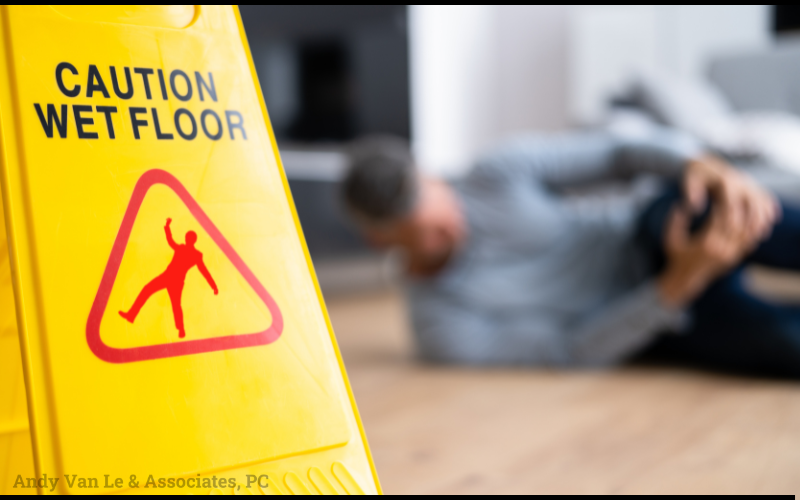
What Should You Do After a Slip and Fall Accident?
What you do immediately after a fall can affect both your health and the evidence available later.
If you are able:
- Seek appropriate medical care. Some injuries may not be obvious immediately after a fall.
- Report the accident. Notify the property owner, manager, business, landlord, or other appropriate person.
- Ask for an incident report. If a report is prepared, request information about obtaining a copy.
- Photograph the hazard. Take pictures from several angles if it is safe to do so.
- Document the surrounding area. Photograph warning signs—or the absence of them—lighting, flooring, stairs, walkways, and other relevant conditions.
- Get witness information. Obtain names and contact information from anyone who saw the fall or the dangerous condition.
- Save your clothing and shoes. Do not immediately discard items that could later become relevant.
- Keep your records. Save medical paperwork, receipts, correspondence, photographs, and documentation of missed work.
- Be careful with insurance-company statements. Avoid guessing about what happened or minimizing your injuries before their extent is known.
Reporting the accident and preserving evidence early can become especially important because dangerous conditions may disappear shortly after a fall.
How Long Do You Have to Report a Slip and Fall Accident in California?
Reporting an accident to a property owner and filing a lawsuit are two different things.
Even when there is not an immediate lawsuit filing deadline, reporting a fall promptly can help create a record of where and when the accident occurred.
It can also provide an opportunity to identify witnesses, request an incident report, and preserve surveillance footage or other evidence before it disappears.
Waiting to report an accident can make it easier for an insurance company or property owner to dispute when, where, or how the injury occurred.

What If There Was No Warning Sign?
Warning signs can become important evidence in premises liability cases.
For example, a business that has recently mopped a floor may place a warning sign near the wet area.
However, simply placing a sign somewhere on the property does not automatically determine whether reasonable precautions were taken.
Questions may include:
- Where was the sign located?
- Could visitors reasonably see it before reaching the hazard?
- Did the sign adequately identify the dangerous condition?
- Were additional precautions reasonable under the circumstances?
- How large was the hazardous area?
- How long did the condition exist?
Photographs taken immediately after the accident can help document the location of warning signs and the condition of the property.
What If the Property Owner Says You Should Have Seen the Hazard?
Insurance companies may argue that an injured person was distracted, was not watching where they were walking, ignored a warning, or should have noticed an obvious condition.
That does not necessarily mean a claim is automatically barred.
California's comparative-fault rules can allow responsibility to be divided when more than one person's actions contributed to an accident.
Evidence such as photographs, surveillance footage, lighting conditions, witness statements, warning signs, and the nature of the hazard can be important when fault is disputed.
Injuries Caused by Slip and Fall Accidents
Falls can cause serious injuries, particularly when someone lands on a hard surface, falls down stairs, strikes their head, or has an existing vulnerability that makes the impact more dangerous.
Slip and fall injuries may include:
- Traumatic brain injuries
- Concussions
- Head and facial injuries
- Neck injuries
- Back injuries
- Herniated discs
- Spinal injuries
- Hip fractures
- Broken wrists and arms
- Shoulder injuries
- Knee and ankle injuries
- Soft-tissue injuries
- Nerve damage
- Chronic pain
- Mobility limitations
Some injuries require surgery, physical therapy, rehabilitation, medication, assistive devices, or ongoing medical treatment.
When a fall results in a fatal injury, qualifying surviving family members may have additional legal options. Learn more about working with a wrongful death lawyer in San Diego.
Falls involving suspected neglect or unsafe conditions in a nursing home may involve additional legal issues. Learn more about nursing home abuse and elder neglect.
Compensation in a San Diego Slip and Fall Case
The damages available depend on the circumstances of the accident and the injuries involved.
Potential compensation may include qualifying losses such as:
Medical Expenses
These may include emergency care, hospitalization, physician visits, diagnostic imaging, surgery, physical therapy, rehabilitation, medication, and other accident-related treatment.
Future Medical Care
Serious injuries may require future surgery, therapy, rehabilitation, medication, medical equipment, or other ongoing care.
Lost Wages
If your injuries prevented you from working, qualifying income lost during your recovery may be included in the claim.
Reduced Earning Capacity
A serious or permanent injury may affect your ability to perform the same job, work the same hours, or earn the same income in the future.
Pain and Suffering
Depending on the circumstances, qualifying noneconomic effects of an injury may also be considered.
Other Accident-Related Losses
Additional damages may be available depending on the facts of the individual case.
A proper evaluation should consider the overall effect of the injury rather than focusing only on the first medical bills.
How Much Is a Slip and Fall Case Worth?
There is no standard settlement amount for a slip and fall accident.
Factors that may affect a claim's value include:
- Severity of the injuries
- Medical treatment received
- Need for future treatment
- Whether an injury is temporary or permanent
- Time missed from work
- Reduced future earning ability
- Pain and physical limitations
- Effect on everyday activities
- Strength of the evidence
- Whether liability is disputed
- Whether comparative fault is alleged
- Available insurance coverage
An early insurance settlement offer may be made before the long-term effects of an injury are fully understood.
For that reason, the circumstances, medical evidence, financial losses, and potential future needs should be evaluated before resolving a serious injury claim.
How Insurance Companies Defend Slip and Fall Claims
Insurance companies may challenge premises liability claims in several ways.
They may argue that:
- The dangerous condition did not exist
- The property owner did not know about the hazard
- The hazard had not existed long enough to be discovered
- Reasonable inspections were performed
- Adequate warnings were provided
- The injured person should have seen the condition
- The injured person caused or contributed to the fall
- The injuries were caused by something else
- The injuries are less serious than claimed
Accident Law Center can investigate the accident, gather available evidence, communicate with insurers, document your injuries and financial losses, and evaluate defenses raised against the claim.
Why Hire a Local San Diego Premises Liability Attorney?
Slip and fall cases can depend heavily on the specific property, dangerous condition, witnesses, records, and evidence involved.
Accident Law Center is a local San Diego law firm located at:
1551 4th Avenue, Suite 102
San Diego, CA 92101
Our attorneys represent injured people throughout San Diego County, including San Diego, Chula Vista, La Jolla, Mission Valley, Downtown San Diego, the Gaslamp Quarter, Pacific Beach, El Cajon, La Mesa, Escondido, Oceanside, Carlsbad, Del Mar, Vista, San Marcos, and surrounding communities.
Slip and fall accidents may occur at local restaurants, stores, hotels, apartment buildings, shopping centers, parking structures, offices, and other properties.
Our focus is on the evidence and circumstances of the individual accident rather than treating every premises liability case the same.
Why Clients Choose Accident Law Center
At Accident Law Center, our attorneys provide personal representation to people injured because of unsafe property conditions.
Clients receive:
- Direct communication with an attorney
- Individual attention to their case
- Investigation of the accident
- Evidence-preservation efforts when appropriate
- Documentation of injuries and financial losses
- Communication and negotiation with insurance companies
- Preparation for litigation when necessary
- Contingency-fee representation
You do not pay attorney fees unless we recover compensation for you.

What a Client Says About Accident Law Center
“Andy kept me updated at least once or twice a month with his patience. It seemed to me that Andy had never been afraid of going to trial by the fact that they really tried exceedingly hard to get a better settlement for me with no fear of pursuing further litigation.”
— Satisfied Client
Speak With a San Diego Slip and Fall Lawyer
If you were injured because of a dangerous condition on someone else's property, Accident Law Center can review what happened and help you understand your legal options.
We can investigate the circumstances of the fall, identify potentially responsible parties, preserve available evidence, document your injuries and losses, communicate with insurance companies, and pursue compensation on your behalf.
Call (619) 525-0001 for a free consultation.
No attorney fee unless we recover compensation for you.
San Diego Slip and Fall FAQs
What should I do after a slip and fall accident?
Seek appropriate medical care, report the accident to the property owner or manager, request an incident report when available, photograph the dangerous condition, obtain witness information, preserve relevant clothing or shoes, and keep records related to your injuries and expenses.
How do you prove negligence in a slip and fall case?
A slip and fall claim generally requires evidence showing that a dangerous condition existed, the responsible party knew or reasonably should have known about it, reasonable steps were not taken to correct or warn about the hazard, and the condition caused the injury.
Can I sue a business for a slip and fall accident?
Potentially. Whether a business may be responsible depends on factors such as what caused the fall, who controlled the area, whether the business created or knew about the hazard, whether it reasonably should have discovered the condition, and whether reasonable precautions were taken.
How long do I have to report a slip and fall accident?
Reporting a fall to a property owner or business and filing a legal claim are different issues. Reporting an accident promptly can help document when and where it occurred and may make it easier to preserve surveillance footage, witness information, incident reports, and other evidence.
What if the property owner says they didn't know about the dangerous condition?
Actual knowledge is not necessarily the only issue. Depending on the circumstances, a premises liability claim may also involve whether a dangerous condition existed long enough that it reasonably should have been discovered through inspection or maintenance.
What if there was a wet-floor or warning sign?
The presence of a warning sign does not by itself resolve every liability question. Its location, visibility, wording, proximity to the hazard, and whether additional precautions were reasonable may all be relevant.
Can I recover compensation if I was partly responsible for my fall?
Potentially. California's comparative-fault rules can allow responsibility to be divided when more than one person's actions contributed to an accident. Compensation may be reduced according to the injured person's share of responsibility.
What evidence should I collect after a slip and fall?
Helpful evidence may include photographs and video of the dangerous condition, surveillance footage, witness information, incident reports, maintenance or inspection records, medical records, photographs of injuries, and documentation of lost income.
What compensation may be available after a slip and fall accident?
Depending on the circumstances, qualifying damages may include medical expenses, future medical care, lost wages, reduced earning capacity, pain and suffering, and other losses resulting from the injury.
How much is a slip and fall case worth?
There is no standard settlement amount. The value depends on factors such as the severity of the injuries, medical treatment, future medical needs, lost income, long-term limitations, strength of the liability evidence, comparative fault, and available insurance coverage.
How much does it cost to hire Accident Law Center?
Accident Law Center handles personal injury cases on a contingency-fee basis. You do not pay attorney fees unless the firm recovers compensation for you.
We’re here to help - send us your details so we can get started.
Contact Us
We will get back to you as soon as possible.
Please try again later.
