Who Can Be Held Liable in a California Truck Accident?
By Andy Van Le
Quick Answer
After a serious commercial truck accident in California, the truck driver may not be the only person or company whose conduct needs to be investigated.
Depending on the circumstances, potential responsibility may involve the:
- Truck driver
- Trucking company or motor carrier
- Owner of the truck
- Company responsible for maintenance or repairs
- Company involved in loading or securing cargo
- Manufacturer of a defective truck or component
- Other parties whose negligence contributed to the crash
Truck accidents can be more complicated than ordinary passenger-vehicle collisions because multiple companies may have played a role in putting the truck and driver on the road.
If you've been seriously injured in a collision with a commercial vehicle, learn more about your legal options after a commercial truck accident.
Why Truck Accident Liability Can Be Complicated
When two passenger vehicles collide, the investigation may initially focus on the actions of the two drivers.
A commercial truck accident can be very different.
The driver may work for a trucking company.
Someone else may own the tractor.
Another company may own the trailer.
A separate business may have loaded the cargo.
An outside contractor may have performed maintenance.
And the truck itself contains mechanical systems and components manufactured by other companies.
That doesn't mean every company connected to a truck is responsible for an accident.
It means a serious truck accident investigation should look beyond the driver's seat and determine what actually caused the collision and who was responsible for those conditions.
The Truck Driver
The driver's actions are an obvious starting point.
Commercial truck drivers operate large vehicles that can cause devastating injuries when something goes wrong.
Potential driver-related issues may include:
- Speeding
- Following too closely
- Unsafe lane changes
- Distracted driving
- Failure to yield
- Driving too fast for conditions
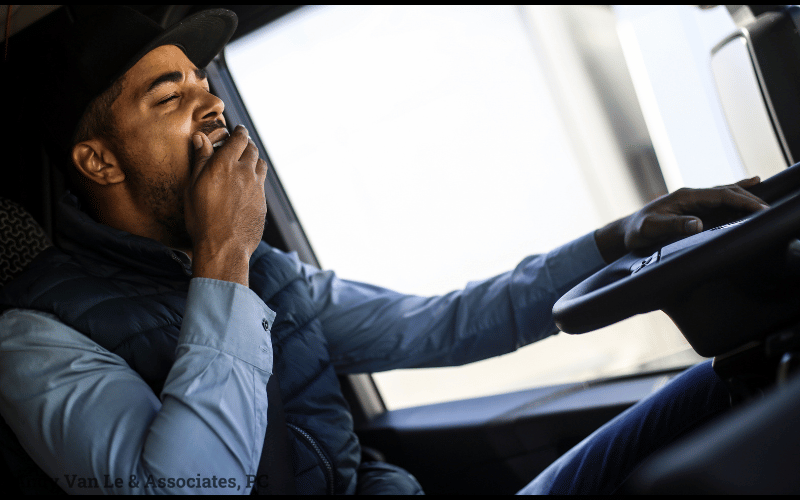
- Fatigue
- Improper turns
- Failure to maintain control
- Other negligent driving
California Civil Code §1714 establishes the general principle that people are responsible for injuries caused by their failure to use ordinary care in managing their person or property.
But determining that the truck driver made a mistake may only be the beginning of the investigation.
The Trucking Company
One of the next questions is usually:
Who was the driver working for when the accident occurred?
A trucking company may become relevant for several reasons depending on the facts and legal relationship involved.
For example, an investigation may examine whether the company was involved in:
- Hiring the driver
- Training the driver
- Supervising the driver
- Establishing safety policies
- Dispatching the truck
- Monitoring driver performance
- Maintaining the vehicle
- Scheduling deliveries
The driver's relationship with the company and what the driver was doing at the time of the accident can therefore become important.
Negligent Hiring and Retention
Sometimes the issue goes beyond the driver's conduct during the crash itself.
Questions may arise about whether a company used reasonable care when hiring or retaining a driver.
Depending on the circumstances, relevant information could include the driver's:
- Qualifications
- Driving history
- Safety history
- Required licensing
- Prior incidents
- Employment records
- Training history
The specific evidence available will depend on the case.
A serious collision may justify investigating what the company knew—or reasonably should have known—about the person it entrusted with a commercial vehicle.
Training and Supervision
Commercial driving requires specialized knowledge and skill.
Depending on the vehicle and operation involved, drivers may need training concerning matters such as:
- Vehicle handling
- Braking distance
- Blind spots
- Turning
- Cargo
- Inspections
- Emergency procedures
- Safe operation under different roadway conditions
If inadequate training or supervision contributed to a collision, that may become part of the liability investigation.
Again, this does not mean that every truck crash is automatically the employer's fault.
The evidence needs to establish what went wrong.
The Owner of the Truck
The company operating the truck isn't necessarily the same company that owns it.
That distinction can matter.
California Vehicle Code §17150 provides that a motor-vehicle owner can be responsible for death, injury, or property damage resulting from a negligent or wrongful act in operating the vehicle when it is being used with the owner's express or implied permission. California law contains additional provisions and limitations concerning this form of owner liability, so the specific relationship between the owner, driver, and other parties must be examined carefully.
This is one reason identifying the actual ownership and business relationships surrounding a commercial truck can be important.

Maintenance and Repair Companies
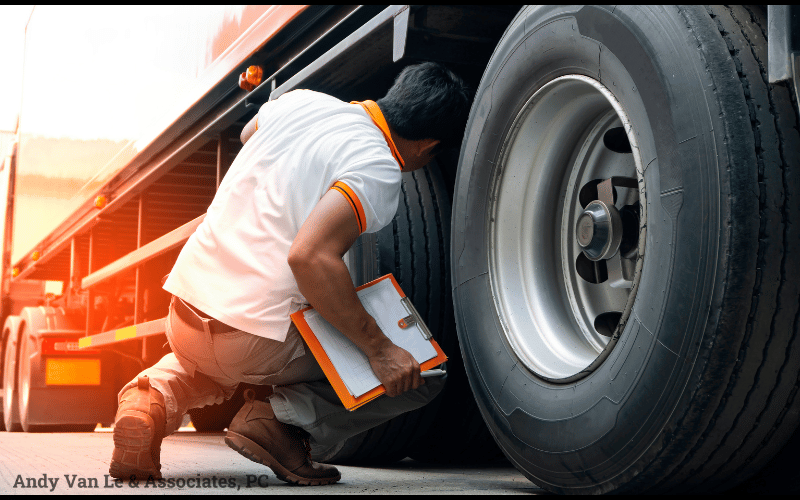
Commercial trucks experience tremendous wear.
Brakes, tires, steering systems, lights, and other components need to function properly.
Sometimes the trucking company handles maintenance internally.
In other situations, outside businesses perform inspections or repairs.
If a mechanical problem contributes to a crash, the investigation may need to determine:
- What failed?
- When was the truck last inspected?
- Was the problem previously reported?
- Was a repair performed?
- Was the repair performed correctly?
- Were warning signs ignored?
- Who was responsible for maintaining that component?
Maintenance records can become extremely important.
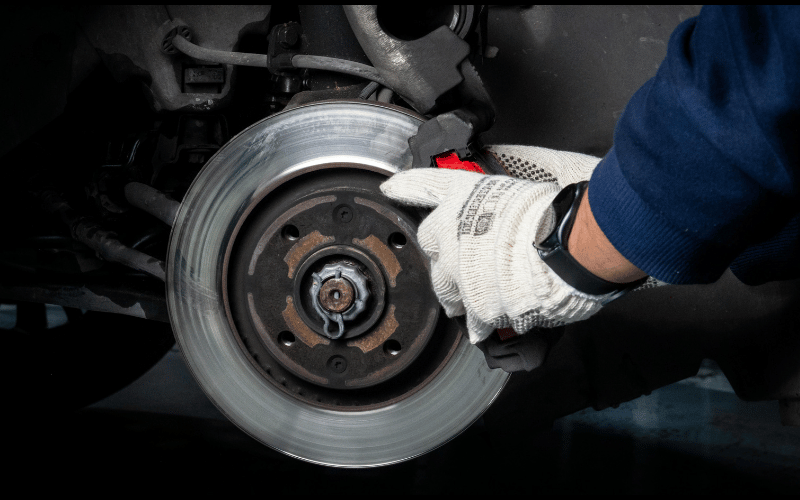
Brake Failures
A fully loaded commercial truck requires considerably more distance to stop than a typical passenger car.
Brake problems can therefore be especially dangerous.
After a serious crash involving a suspected brake failure, relevant evidence may include:
- Inspection records
- Repair invoices
- Driver inspection reports
- Maintenance schedules
- Component condition
- Prior complaints
- Physical examination of the truck
It can be important to preserve the vehicle before repairs or alterations destroy evidence about its condition at the time of the collision.
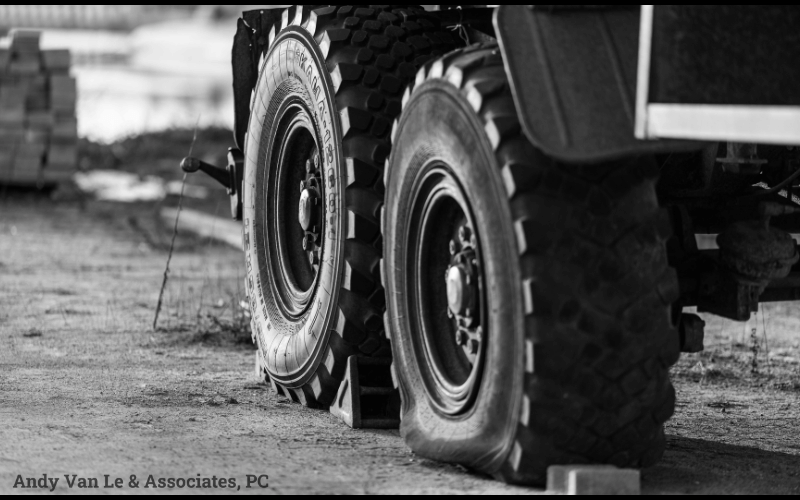
Tire Failures
Commercial truck tires also experience heavy loads and substantial mileage.
A tire failure can potentially cause a driver to lose control.
An investigation might consider:
- Tire condition
- Tread depth
- Inflation
- Previous damage
- Maintenance history
- Whether the tire was appropriate for the vehicle
- Whether a defect contributed to the failure
Depending on what caused the failure, different parties may need to be investigated.
Cargo-Loading Companies
Cargo can dramatically affect how a truck handles.
Improperly loaded or secured cargo may potentially:
- Shift during travel
- Affect vehicle balance
- Contribute to a rollover
- Fall from the truck
- Make steering more difficult
- Affect braking
- Create hazards for surrounding motorists
Sometimes the driver or trucking company loads the cargo.
Other times, another business may be responsible for loading or securing the shipment.
That distinction matters.
If improper loading contributed to the crash, the investigation should determine who actually performed and controlled that work.
Overloaded Trucks
Weight can affect stopping distance, handling, tire performance, and other aspects of commercial vehicle operation.
If excessive weight is suspected, records concerning the shipment and load may become relevant.
Potential evidence might include:
- Bills of lading
- Weight tickets
- Shipping documents
- Cargo records
- Dispatch information
- Loading records
The goal is to determine what the truck was carrying and whether that contributed to the accident.
Truck and Parts Manufacturers
Not every truck accident is caused by a driver or trucking company.
A defective vehicle or component can potentially contribute to a collision.
Examples might involve problems with:
- Braking systems
- Tires
- Steering components
- Coupling systems
- Lighting
- Other vehicle components
Product-defect cases raise different legal and technical questions from ordinary negligence claims.
When a mechanical failure is suspected, preserving the truck and failed component can become particularly important.
Leasing Companies and Other Business Relationships
The commercial trucking industry can involve complicated ownership and contractual arrangements.
A tractor might be owned by one entity and operated by another.
A trailer may belong to a different business.
A driver may have a contractual relationship with the carrier.
Equipment may be leased.
Cargo may belong to another company.
The names printed on the truck don't necessarily tell the entire story.
Contracts, registration records, operating records, insurance information, and other business documents may be needed to understand who controlled what.
What If the Driver Is Called an Independent Contractor?
The phrase “independent contractor” should not end the investigation.
Trucking businesses can have complicated arrangements with drivers and equipment owners.
The legal consequences of those relationships depend on the actual facts and applicable law, not simply the label placed on an agreement.
Questions may include:
- Who controlled the work?
- Who dispatched the driver?
- Who owned the equipment?
- Who established operating requirements?
- What was the driver's relationship with the motor carrier?
- What was the driver doing when the collision occurred?
These can be fact-intensive issues.
Federal Safety Records May Provide Important Information
Commercial motor carriers operating within federal jurisdiction may have information associated with their U.S. Department of Transportation records.
The Federal Motor Carrier Safety Administration maintains systems containing information about registered motor carriers, including carrier-identification and safety-related information.
Depending on the case, records concerning the carrier and its operations may become part of the broader investigation.
But public database information is only one piece of the puzzle.
A truck accident case may require records specifically connected to the driver, vehicle, trip, maintenance, cargo, and collision.
Electronic Logging Information
Commercial trucking operations may generate electronic records relating to a driver's work and driving activity.
Depending on the operation and applicable requirements, electronic logging information may become relevant when fatigue or hours of operation are at issue.
This information can potentially help establish a timeline of the driver's activity leading up to a collision.
The exact records available will vary.
Electronic Data From the Truck
Modern commercial vehicles can contain substantial electronic information.
Depending on the truck and systems installed, data may potentially provide information concerning vehicle operation around the time of a collision.
That information may become particularly valuable when there is a dispute about:
- Speed
- Braking
- Vehicle movement
- Driver actions
- Timing
Specialized experts may be needed to preserve and interpret electronic evidence properly.

Dispatch and Communication Records
Another potentially important category is communication between the driver and company.
Records may help establish:
- Delivery schedules
- Dispatch instructions
- Driver communications
- Route information
- Timing
- Operational decisions
For example, if fatigue or scheduling pressure becomes an issue, dispatch information could provide useful context.
The significance depends entirely on the facts.
Why Evidence Needs to Be Preserved Quickly
This is one of the biggest differences between a serious commercial truck accident and an ordinary fender bender.
There may be a large amount of evidence—but that doesn't mean it will remain available indefinitely.
Potential evidence may include:
- The truck itself
- Trailer
- Electronic data
- Driver records
- Maintenance records
- Inspection records
- Cargo documents
- Dispatch communications
- Video footage
- Photographs
- Witness information
When appropriate, steps may be taken to request preservation of relevant evidence.
Waiting too long can make an already complicated investigation much more difficult.
What If Several Parties Share Responsibility?
A truck accident does not always have one cause.
Imagine a situation where:
- A driver was traveling too fast.
- The truck's brakes were poorly maintained.
- Cargo was improperly secured.
The collision may involve several contributing factors.
California's negligence framework recognizes responsibility for injury caused by a person's lack of ordinary care, while also accounting for the injured person's own lack of ordinary care when applicable.
This is why a truck accident investigation should focus on all contributing causes, not simply the most obvious one.
Why Identifying Every Responsible Party Matters
Serious truck accidents can result in catastrophic losses, including:
- Extensive hospitalization
- Surgery
- Rehabilitation
- Permanent disability
- Lost income
- Reduced earning capacity
- Future medical treatment
- Pain and suffering
- Wrongful death
Determining who may be legally responsible is therefore an important part of evaluating the case.
The purpose isn't to add defendants unnecessarily.
It's to understand the complete chain of events that led to the accident and determine which people or businesses may actually bear legal responsibility.
Truck Accidents Require a Different Type of Investigation
I've seen why it's a mistake to treat a commercial truck accident exactly like a typical car accident.
The investigation may need to answer questions that simply don't arise in most passenger-vehicle cases:
Who employed or contracted with the driver?
Who owned the truck?
Who maintained it?
Who loaded it?
Were there mechanical problems?
What electronic records exist?
What company records should be preserved?
Those questions can significantly change how a case is investigated.
What Should You Do After a Serious Truck Accident?
Your health and safety come first.
Seek appropriate medical care.
When possible, useful steps may include:
- Calling law enforcement
- Photographing the vehicles
- Photographing the scene
- Obtaining witness information
- Saving medical documentation
- Preserving photographs and video
- Keeping insurance correspondence
- Avoiding unnecessary statements about fault
- Avoiding social-media discussions about the accident
Commercial truck cases can involve evidence that an injured person may not be able to obtain independently, which is another reason early investigation can matter.

Speak With a San Diego Truck Accident Lawyer
If you've been seriously injured in a collision involving a tractor-trailer, semi-truck, delivery truck, or other commercial vehicle, determining who caused the crash may require looking beyond the driver.
At Accident Law Center, I help injured people in San Diego investigate serious accidents and understand the parties that may potentially be responsible.
Learn more about your legal options after a commercial truck accident.
Call (619) 525-0001 or contact our office for a free consultation.
Legal Disclaimer
This article is for informational purposes only and does not constitute legal advice. Reading this article does not create an attorney-client relationship with Andy Van Le & Associates, PC. Truck accident liability depends on the specific facts, business relationships, evidence, and applicable state and federal law. Contact an attorney directly for advice regarding your particular circumstances.
Frequently Asked Questions
Who can be held responsible for a truck accident in California?
Depending on the facts, potential responsibility may involve the truck driver, trucking company, vehicle owner, maintenance provider, cargo-loading company, manufacturer, or another person or business whose conduct contributed to the accident.
Can the trucking company be liable for its driver's accident?
Potentially. The driver's employment or agency relationship, what the driver was doing when the accident occurred, and the company's own conduct can all be relevant. A trucking company may also face issues involving its own hiring, training, supervision, maintenance, or other practices depending on the evidence.
Can the owner of a truck be liable if someone else was driving?
California Vehicle Code §17150 provides for certain owner liability when a vehicle is operated with the owner's express or implied permission. Other statutory provisions and limitations can apply, and separate agency or employment principles may also be relevant.
Can a maintenance company be responsible for a truck accident?
Potentially. If negligent maintenance or repair contributed to a mechanical failure and collision, the company responsible for that work may need to be investigated.
Who is responsible when improperly loaded cargo causes a truck accident?
It depends on who was responsible for loading, securing, inspecting, and transporting the cargo and what actually caused the collision. The driver, carrier, loading company, or other parties could potentially become relevant depending on the evidence.
What if the truck driver is an independent contractor?
Calling a driver an independent contractor does not by itself answer every liability question. The actual working relationship, contractual arrangement, control, ownership, and applicable law need to be evaluated.
Why should truck accident evidence be preserved quickly?
Commercial truck cases may involve electronic data, maintenance records, driver information, cargo documents, dispatch communications, video, and physical evidence. Some evidence can change, disappear, or be overwritten, making timely preservation important.