Left-Turn Motorcycle Accidents in California: Who Is Usually at Fault?
By Andy Van Le
Quick Answer
In many California left-turn motorcycle accidents, the driver making the left turn may be responsible if they turn across the path of an approaching motorcycle without yielding the right-of-way.
California Vehicle Code §21801 requires a driver intending to turn left to yield to vehicles approaching from the opposite direction that are close enough to create a hazard during the turn.
However, fault is not automatic.
Insurance companies may argue that the motorcyclist was speeding, was difficult to see, entered the intersection unexpectedly, or otherwise contributed to the collision. Evidence such as traffic-camera footage, dash-camera video, witness statements, vehicle damage, skid marks, and electronic data can become extremely important when determining what actually happened.
If you've been injured in this type of collision, you can learn more about legal help after a motorcycle accident in San Diego.
Why Left-Turn Accidents Are So Dangerous for Motorcyclists
A motorcycle rider traveling straight through an intersection may have only seconds to react when an oncoming vehicle suddenly turns left across their path.
For someone inside a passenger vehicle, a collision might result in significant vehicle damage.
For a motorcyclist, there is very little physical protection.
The rider may strike the side of the turning vehicle, be thrown from the motorcycle, or be pushed into another vehicle or object.
These accidents can result in serious injuries involving the:
- Head and brain
- Neck and spine
- Shoulders
- Arms and hands
- Hips and pelvis
- Legs and knees
- Feet and ankles
- Internal organs
Road rash, fractures, traumatic brain injuries, spinal injuries, and permanent scarring may also occur.
The severity of these accidents makes determining exactly what happened particularly important.
What Does California Law Say About Left Turns?
California Vehicle Code §21801 addresses the right-of-way when a driver intends to make a left turn or U-turn.
In general, a driver turning left must yield to vehicles approaching from the opposite direction when those vehicles are close enough to constitute a hazard during the turning movement.
Once the driver has properly yielded and can complete the turn with reasonable safety, the law also addresses the responsibilities of approaching vehicles.
What does that mean in a motorcycle accident?
A driver generally cannot simply turn across the path of an approaching motorcycle when doing so creates an immediate collision hazard.
But every accident needs to be evaluated based on its individual facts.
A Common Left-Turn Motorcycle Accident Scenario
Imagine you're riding your motorcycle straight through an intersection in San Diego.
An SUV approaches from the opposite direction.
The SUV driver intends to turn left.
You expect the driver to wait for you to pass.
Instead, the SUV begins turning directly across your lane.
You brake and try to avoid the collision, but there isn't enough distance.
Your motorcycle strikes the passenger side of the SUV.
The SUV driver then tells the insurance company:
“I never saw the motorcycle.”
That statement may help explain how the accident occurred, but it doesn't necessarily excuse the failure to yield.
Drivers have a responsibility to watch for other lawful roadway users, including motorcycles.
“I Didn't See the Motorcycle” Is a Common Issue
Motorcycles have a smaller visual profile than passenger cars and trucks.
That can make them more difficult for inattentive drivers to notice.
California Highway Patrol specifically advises motorists to check mirrors and blind spots and warns riders to anticipate situations where cross traffic or turning motorists may fail to see them.
A driver may claim:
- The motorcycle appeared suddenly.
- The rider was in a blind spot.
- The motorcycle blended into traffic.
- Sun glare prevented visibility.
- The rider was wearing dark clothing.
- The motorcycle's headlight wasn't noticeable.
These claims don't automatically establish who was legally responsible.
The investigation should look at what a reasonably careful driver should have seen and done under the circumstances.
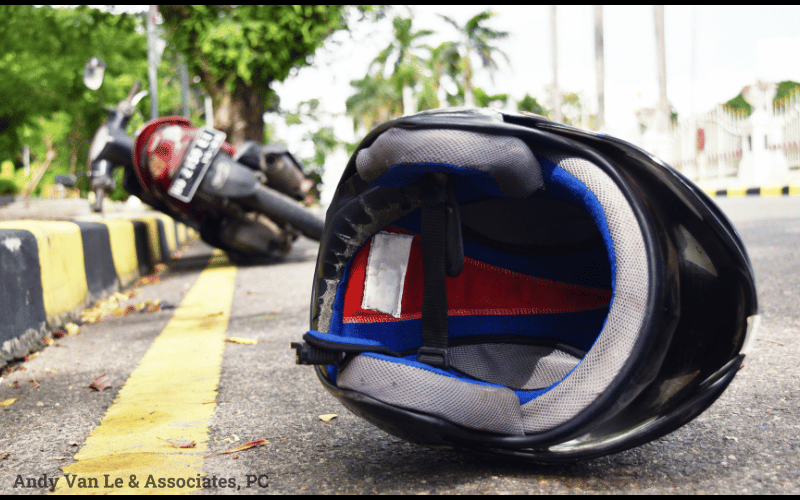
What If the Driver Says the Motorcyclist Was Speeding?
This is one of the arguments I would expect an insurance company to examine closely after a left-turn motorcycle accident.
The turning driver may acknowledge making the turn but argue:
“The motorcycle was going so fast that I couldn't see it coming.”
Speed can potentially affect fault.
But an allegation of speeding is not the same as proof.
Evidence may be needed to determine approximately how fast the motorcycle was traveling before impact.
That evidence could include:
- Surveillance footage
- Dash-camera footage
- Traffic-camera footage
- Skid marks
- Vehicle damage
- Motorcycle damage
- Witness testimony
- Electronic vehicle information
- Accident reconstruction
The physical evidence may tell a very different story from what either driver remembers.
Can a Motorcyclist Be Partially at Fault?
Yes.
California follows a comparative-fault system.
That means responsibility for an accident can potentially be divided among multiple parties.
For example, a turning driver might be primarily responsible for failing to yield, while evidence could potentially show that the motorcyclist also contributed to the collision.
That does not necessarily eliminate the rider's ability to recover compensation.
Instead, the rider's recovery may be reduced based on the percentage of responsibility assigned to them.
I've explained this issue in more detail in How Comparative Negligence Works in California Personal Injury Cases.
What If the Motorcycle Was Lane Splitting?
Lane splitting deserves special attention because California is different from many other states.
California law defines lane splitting as operating a two-wheeled motorcycle between rows of stopped or moving vehicles in the same lane.
The California Highway Patrol also recognizes lane splitting and provides safety guidance for riders.
Therefore, the fact that a motorcycle was lane splitting does not automatically establish that the rider caused an accident.
However, the circumstances still matter.
An investigation may consider:
- Traffic speed
- Motorcycle speed
- Speed differential
- Visibility
- Lane positioning
- Surrounding vehicles
- Road conditions
- Where the collision occurred
- Whether either party had enough time to react
I've covered this issue separately in California Lane Splitting Laws: What Happens If You're Injured in a Crash?.
What Evidence Can Prove Who Had the Right-of-Way?
Left-turn accidents frequently turn into disputes over what happened seconds before impact.
The motorcyclist may say:
“I was traveling straight and the car turned directly in front of me.”
The driver may say:
“The motorcycle came out of nowhere.”
That's why independent evidence can become so valuable.
Traffic-Camera Footage
Some intersections have cameras that may capture portions of an accident or traffic conditions immediately before it.
Whether footage exists and whether it can be obtained depends on the particular location and system.
Business Surveillance Cameras
Businesses near an intersection may have exterior cameras.
A gas station, restaurant, apartment building, parking garage, retail store, or office building may have captured the roadway.
This footage can potentially disappear if it isn't preserved quickly.
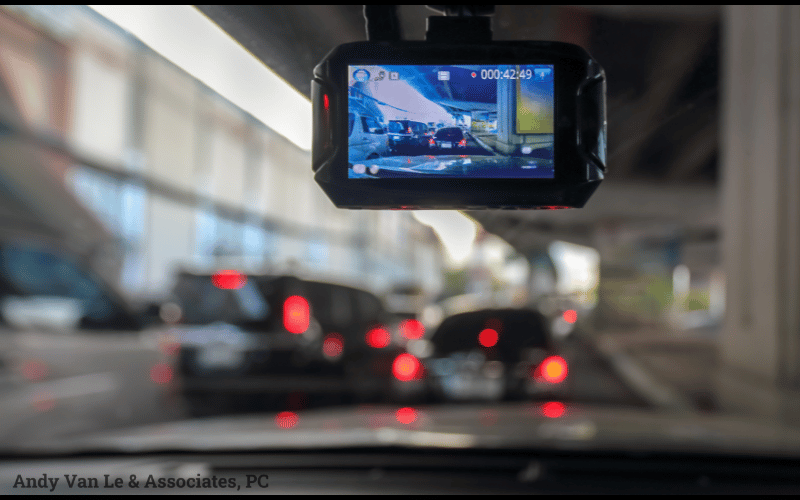
Dash Cameras
A witness's dash camera may provide some of the strongest evidence available.
It may show:
- Which vehicle entered the intersection first
- The traffic signal
- Approximate vehicle movements
- Whether the driver hesitated
- Whether the motorcycle was visible
- The point of impact
Witness Statements
Independent witnesses can be extremely important when the two drivers provide conflicting accounts.
Get names and contact information whenever possible.
Police Reports
A responding officer may document:
- Driver statements
- Witness statements
- Vehicle positions
- Road conditions
- Citations
- Physical evidence
- The officer's observations
A police report can be an important piece of the investigation, although it isn't necessarily the only evidence relevant to determining civil liability.
Vehicle Damage Can Help Tell the Story
Where the motorcycle strikes the turning vehicle may help investigators understand how the collision occurred.
For example, damage to the side of a left-turning vehicle may be consistent with the motorcycle traveling straight as the vehicle crossed its path.
But vehicle damage should not be interpreted in isolation.
The location and severity of damage may need to be considered alongside roadway measurements, photographs, video, witness statements, and other evidence.
Accident Reconstruction May Be Important in Serious Cases
When fault is heavily disputed or the injuries are severe, accident reconstruction may help determine how a collision occurred.
An accident reconstruction professional may evaluate:
- Skid and tire marks
- Vehicle positions
- Impact locations
- Roadway geometry
- Sight distances
- Vehicle damage
- Video evidence
- Electronic vehicle data
- Reaction times
- Estimated speeds
The goal is to reconstruct the events leading up to the collision using physical and scientific evidence rather than relying solely on competing recollections.
Why Preserving Evidence Quickly Matters
Motorcycle accident evidence can disappear surprisingly quickly.
Vehicles get repaired.
Motorcycles get moved or totaled.
Skid marks fade.
Witnesses become difficult to locate.
Businesses overwrite surveillance recordings.
Road conditions change.
The sooner important evidence is identified and preserved, the better opportunity there may be to establish what actually happened.
That's especially important when an insurance company is already trying to place responsibility on the motorcyclist.
I discuss this problem further in Why Insurance Companies Often Blame Motorcyclists After an Accident.
What Compensation May Be Available After a Serious Motorcycle Accident?
When another person's negligence causes a motorcycle accident, an injured rider may potentially seek compensation for accident-related losses.
Depending on the circumstances, those damages may include:
- Emergency medical treatment
- Hospitalization
- Surgery
- Physical therapy
- Rehabilitation
- Future medical care
- Lost wages
- Reduced earning capacity
- Pain and suffering
- Other legally recoverable losses
The value of a motorcycle accident claim depends on the individual facts of the case.
There isn't a standard settlement amount for a left-turn motorcycle accident.
Don't Assume the Insurance Company's Fault Decision Is Final
One of the most important things I want injured riders to understand is that an insurance company's initial decision about fault isn't necessarily the final word.
An adjuster may reach a conclusion based primarily on statements from the insured driver.
Additional evidence can sometimes change the picture considerably.
If an insurer claims that you were speeding, couldn't be seen, were lane splitting improperly, or somehow caused the accident, the question becomes:
What does the evidence actually show?
That is where photographs, video, witnesses, physical evidence, medical records, and a careful investigation become important.
What Should You Do After a Left-Turn Motorcycle Accident?
Your health comes first.
Seek appropriate medical attention for your injuries.
When circumstances permit, other useful steps can include:
- Calling law enforcement
- Photographing the accident scene
- Photographing both vehicles
- Obtaining driver and insurance information
- Identifying witnesses
- Saving helmet or camera footage
- Keeping damaged riding equipment
- Keeping medical records and bills
- Avoiding unnecessary statements about fault
- Being cautious about social media posts
If you have a helmet camera or other recording device, preserve the original footage.
Don't edit or overwrite it.

Speak With a San Diego Motorcycle Accident Lawyer
Left-turn motorcycle accidents can result in devastating injuries, and disputes about fault can begin almost immediately.
If a driver turned across your path and caused a serious collision, it's important to determine what the evidence shows rather than simply accepting an insurance company's version of events.
At Accident Law Center, I represent injured people in San Diego and help them understand their rights after serious motorcycle crashes.
Learn more about legal help after a motorcycle accident.
Call (619) 525-0001 or contact our office for a free consultation.
Legal Disclaimer
This article is for informational purposes only and does not constitute legal advice. Reading this content does not create an attorney-client relationship with Andy Van Le & Associates, PC. Every motorcycle accident is different, and fault and available compensation depend on the specific facts and applicable law. Contact an attorney directly for legal advice about your situation.
Frequently Asked Questions
Who is usually at fault when a car turns left in front of a motorcycle in California?
The left-turning driver may be responsible when they fail to yield to an approaching motorcycle that is close enough to create a hazard. However, fault depends on the circumstances, including vehicle speed, visibility, traffic signals, and the actions of both drivers.
Does a left-turning driver always have to yield to a motorcycle?
California Vehicle Code §21801 generally requires a driver making a left turn to yield to approaching vehicles that are close enough to constitute a hazard during the turn. The specific facts of the collision still matter when determining liability.
What if the driver says they didn't see the motorcycle?
A driver's claim that they did not see the motorcycle does not automatically eliminate responsibility. Evidence such as video, witness statements, sight distances, lighting conditions, and vehicle positioning may help determine whether the motorcycle should have been visible.
Can a motorcyclist be partially at fault for a left-turn accident?
Yes. California's comparative-fault rules can allow responsibility to be divided between the parties. If a motorcyclist is found partially responsible, compensation may potentially be reduced according to the rider's percentage of fault.
Is a motorcyclist automatically at fault if they were lane splitting?
No. California law recognizes lane splitting. Whether lane splitting contributed to a particular accident depends on the circumstances, including speed, traffic conditions, visibility, positioning, and the actions of the other driver.
What evidence is important after a left-turn motorcycle crash?
Useful evidence may include photographs, surveillance footage, dash-camera or helmet-camera video, witness statements, police reports, vehicle damage, roadway evidence, medical records, and in some cases accident reconstruction.
What if the insurance company blames me for the motorcycle accident?
An insurer's initial fault determination does not necessarily resolve the issue. The available physical evidence, video, witness accounts, police documentation, and other information should be evaluated when determining how the accident occurred.